Health And Medical Science
Integrative Pathways For Cancer Care: Traditional Medicine And Translational Oncology In India
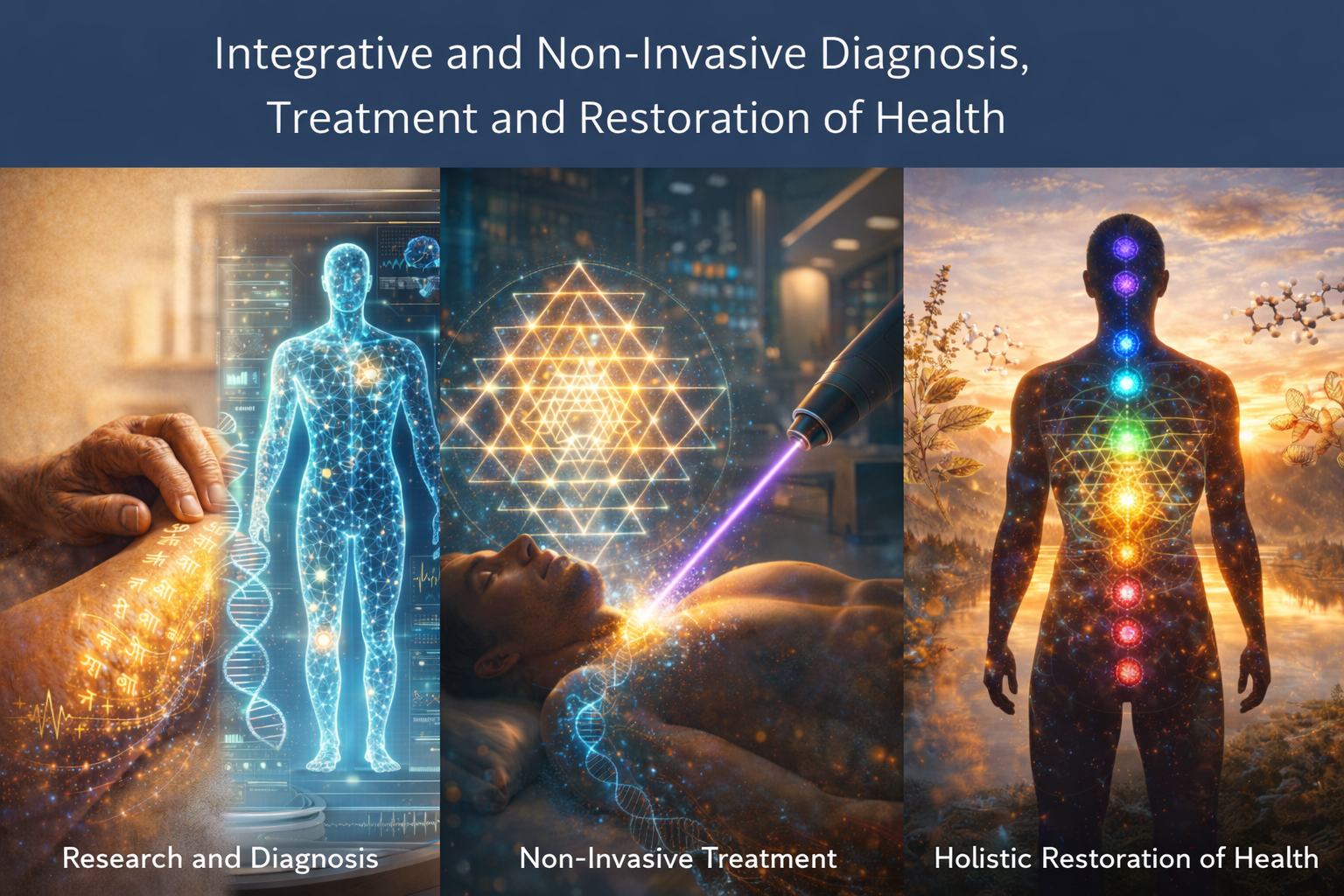
 The rising burden of non-communicable diseases including cancer in India cannot be understood in isolation from broader ecological, agricultural, and public health transformations. The modern development paradigm is marked by chemical-intensive agriculture, industrial pollution, and resource over-extraction—which has profoundly altered food systems, environmental exposures, and lifestyle patterns. These changes have contributed to widespread contamination of the food chain and growing incidence of chronic and non-communicable diseases, including cancer. Addressing this challenge therefore requires approaches that extend beyond disease treatment alone, engaging with prevention, early diagnosis, therapeutic innovation, and long-term care within an integrated health framework.
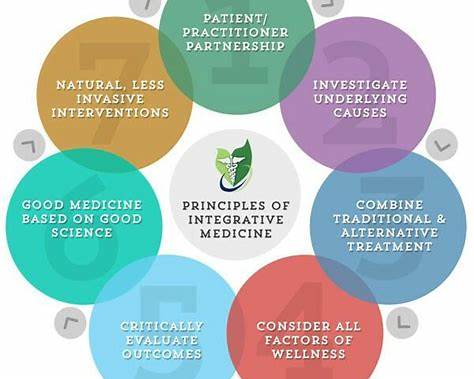
Cancer treatment in India has historically remained centred on allopathic medicine, with limited institutional engagement with the country’s rich legacy of traditional health systems. While modern oncology has achieved significant advances in diagnostics and therapeutics, the marginalisation of traditional systems has constrained opportunities for integrative innovation. This separation is neither inevitable nor desirable. The interface between modern science and traditional medicine is not a binary choice but a continuum that offers scope for convergence, complementarity, and innovation.
India’s traditional medical systems—Ayurveda, Siddha, Unani, and other indigenous knowledge traditions—represent centuries of empirical observation, holistic understanding of disease, and patient-centred care. When critically examined through contemporary scientific tools, these systems can contribute meaningfully to prevention, early diagnosis, supportive care, and therapeutic discovery. Integrating these traditions within evidence-based frameworks offers an opportunity to expand the scope of cancer care while remaining culturally rooted and socially inclusive.
Bridging Discovery and Cure
Recognising this potential, the Development Centre for Alternative Policies (DCAP) initiated a strategic partnership in 2023 with leading domain experts to establish an Advanced Research Centre for Molecular Diagnostics and Translational Oncology in India. The Centre is envisioned as a national platform that bridges discovery and cure by linking molecular science, clinical research, and traditional medical knowledge within a unified translational framework.
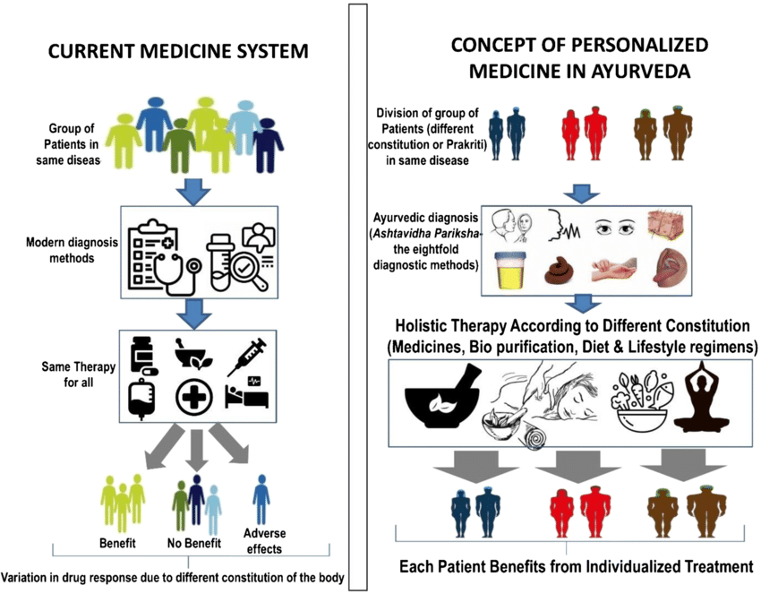
A core objective of the Centre is the creation of a Cancer Data Bank, integrating molecular, clinical, lifestyle, and therapeutic response data. This data infrastructure will support precision oncology by enabling stratified diagnosis, personalised treatment protocols, and improved prognostic assessment. Importantly, the data framework is designed to include validated inputs from traditional medicine interventions, allowing systematic evaluation of outcomes and mechanisms of action.
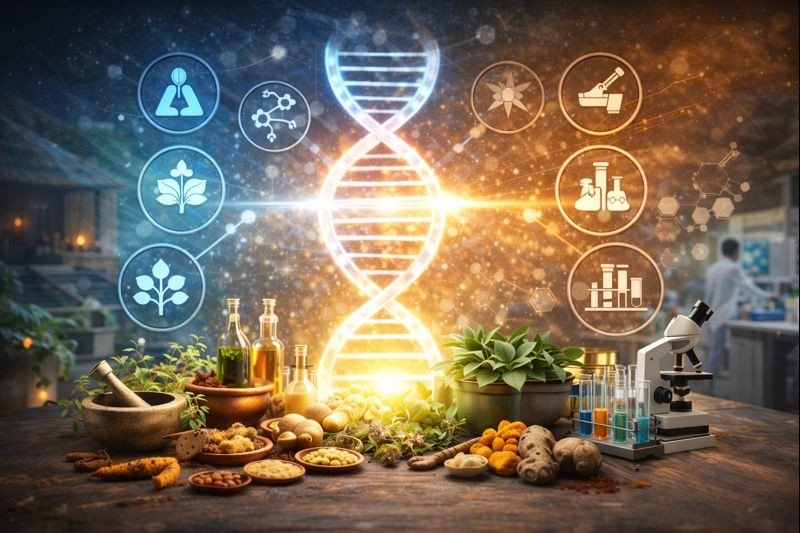
The Centre will also establish an Advanced Facility for Drug Discovery and Development, focused on identifying, validating, and refining therapeutic compounds from both synthetic and natural sources. Traditional medicinal formulations and bioactive compounds will be subjected to rigorous molecular characterisation, pre-clinical testing, and translational validation, ensuring alignment with global scientific and regulatory standards.
By positioning translational research at the intersection of modern oncology and traditional medicine, the initiative seeks to move beyond parallel systems toward integrated clinical pathways. This approach enables the development of complementary therapies that can enhance treatment efficacy, reduce toxicity, improve quality of life, and support long-term survivorship—particularly relevant in low-resource and high-burden settings.
At a policy level, the Advanced Research Centre aims to inform national health strategies by generating robust evidence for integrative oncology models. The outcomes are expected to contribute to regulatory frameworks, public health programmes, and capacity-building initiatives that recognise plural medical systems while maintaining scientific rigour and patient safety.
Ultimately, DCAP’s initiative envisions a future-ready healthcare ecosystem—one that respects India’s cultural and intellectual heritage while advancing globally competitive biomedical research. By bridging discovery and cure through integration, the Centre seeks to redefine cancer care in India as inclusive, evidence-driven, and innovation-led.
Aligned with the “Make in India” vision, the initiative seeks to revolutionize healthcare through indigenous innovation—developing AI-enabled tools for early disease detection, advancing immunotherapy, and fostering collaboration among scientists, clinicians, and biotech enterprises. Its goal is to ensure that cutting-edge research swiftly translates into accessible, holistic solutions for complex diseases such as cancer, neurological disorders, and rare conditions.